Introduction
RERA and Its Purpose
RERA Registration in India plays a crucial role in bringing transparency, accountability, and discipline to the real estate sector under the Real Estate (Regulation and Development) Act, 2016. Through this regulatory framework, RERA safeguards homebuyers and brings developers, agents, and real estate projects under a uniform system of compliance. Earlier, the real estate market remained largely unregulated; however, RERA now monitors projects to ensure fair practices, timely delivery, and accurate disclosure of information.
RERA Registration in India: Requirements and Applicability
Under RERA, promoters must register real estate projects before advertising, marketing, or selling them. This requirement becomes mandatory when a project exceeds 500 square meters of land area or includes more than 8 residential units, which makes RERA applicable to most medium- and large-scale developments. As a result, RERA enforces escrow-based fund utilization, standardized carpet area definitions, and strict timelines, thereby building greater trust and confidence among buyers.
How RERA Has Improved Transparency and Buyer Protection
Overall, RERA regulates the entire real estate ecosystem by overseeing project approvals, developer obligations, agent conduct, and buyer rights. Moreover, its implementation has transformed the Indian real estate sector into a more organized, transparent, and buyer-friendly market. Consequently, property investment and ownership have become safer and more reliable.
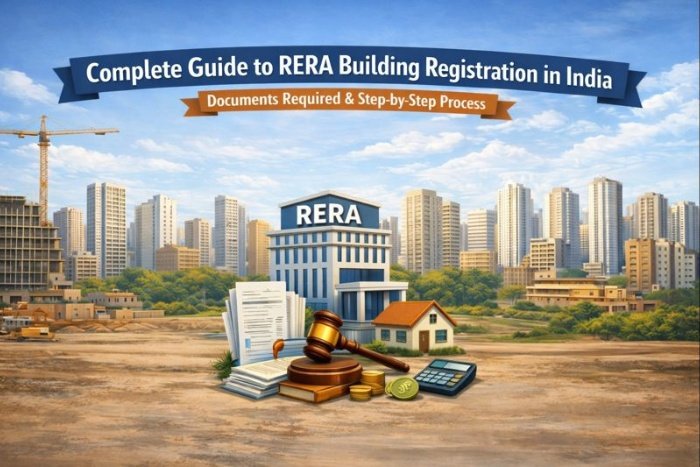
- Documents Required for Building Approval in India
First, to ensure smooth approval, promoters must prepare the following documents. Exact requirements may vary slightly by state.
- Identity & Promoter Details
- PAN Card of the promoter or company
- Passport-size photographs of promoters/directors
- GST Registration Certificate
- Bank Letter confirming the designated RERA escrow account
- Property Ownership & Legal Documents
- Registered Sale Deed of the project land
- Settlement Deed / Gift Deed (if applicable)
- Encumbrance Certificate (EC)
- TSLR / Patta / Land Revenue Records
- Construction & Approval Documents
- Corporation / Local Body Approval Letter
- Sanctioned Building Plan & Drawings
- DTCP / CMDA / Planning Authority Approval (local / urban)
- Construction Agreement
- Contractor Details & Agreements
- Form B( Promoter/Owner Declaration)
- Technical & Engineering Certificates
- Carpet Area Calculation Statement (RERA compliant)
- Soil Test Report from a certified lab
- Structural Stability Certificate
- Registered Engineer / Architect Certificate
- Financial & Project Information
- Total Project Cost Breakdown
- Project Timeline & Phase Details
- Separate RERA Escrow Account Details (70% rule)
- Additional Documents (If Applicable)
- Joint Venture Agreement
- Power of Attorney
- Registration Certificate
Therefore, Before applying for RERA registration, promoters must ensure that they correctly calculate and clearly define the carpet area of each flat. They should also accurately allocate the proportionate share of common areas such as staircases, lifts, corridors, and utility spaces. In addition, promoters must properly document common well areas, super built-up areas, and the undivided share of land (UDS).
Therefore, accurate area calculation and transparent disclosure help avoid future disputes, ensure compliance with RERA guidelines, and build buyer confidence. When promoters define area details clearly before registration, buyers gain assurance that the information is genuine, consistent, and legally compliant.
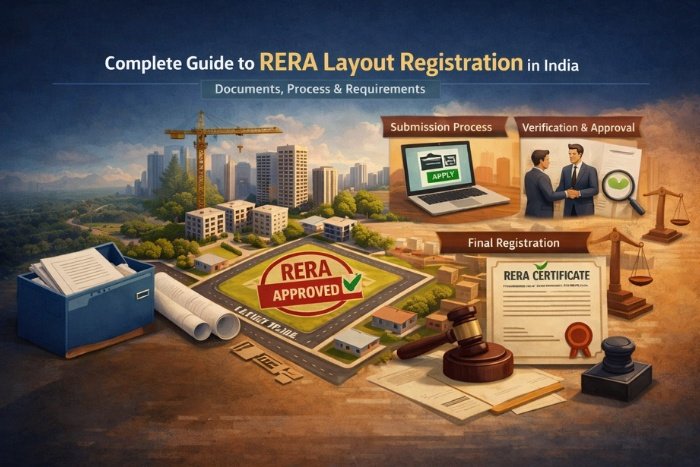
Step-by-Step RERA Registration Process
Step 1: Document Preparation
First, promoters should collect, verify, and scan all required documents in clear PDF format. Consistency in names, survey numbers, and measurements must be ensured.
Step 2: Visit the State RERA Portal
Next, promoters must access the official RERA website of the respective state.
Examples:
- Tamil Nadu – rera.tn.gov.in
- Maharashtra – maharera.mahaonline.gov.in
- Karnataka – rera.karnataka.gov.in
Step 3: Online Account Creation
An account is created using:
- PAN details
- Mobile number & email ID
- OTP verification
Step 4: Document Upload
Each document is uploaded as per portal guidelines:
- PDF for approvals and certificates
- JPG/PNG for photographs
- File size limits must be followed
Step 5: Escrow Account Confirmation
A separate RERA project bank account must be opened, where 70% of buyer collections will be deposited and utilized only for project construction.
Step 6: Application Review & Submission
All entered details are reviewed carefully before final submission. An acknowledgment number is generated for tracking.
Step 7: Payment of RERA Fees
Registration fees are paid online. The fee amount is calculated based on:
- Project area
- Number of units
- Project category
Step 8: Authority Verification
If required, the authority requests clarifications or additional documents, and promoters must submit them within the stipulated time.
Step 9: Site Inspection (If Required)
In certain cases, a physical verification of the project site and approvals may be conducted by the authority.
Step 10: RERA Registration Certificate Issuance
Upon approval:
- A RERA Sanctioned Number is issued
- A digital certificate is made available
- The RERA authority publishes the project details on the official portal.
Step 11: Post-Registration Compliance
After registration:
- RERA number must be displayed in all advertisements
- Quarterly progress updates must be submitted
- Escrow norms must be followed
- Timely project completion must be ensured
- Common Reasons for RERA Application Rejection
- Incomplete or inconsistent documents
- Land title disputes
- Missing statutory approvals
- Incorrect carpet area calculation
- Expired technical certificates
Conclusion
In conclusion, RERA Registration in India ensures legal compliance, protects buyers, and builds long-term trust in real estate projects. Although RERA registration may appear documentation-heavy, a systematic approach makes the process structured and manageable. With proper preparation and professional support, promoters can obtain approvals without complications.