
Introduction
Buying a property is exciting, but the real security comes from the Sale Deed — the registered legal document that transfers ownership. Once registered at the Sub-Registrar’s office, it becomes your primary proof of title.
Many buyers focus only on price and location, but overlooking even one clause in the Sale Deed can lead to disputes, unpaid dues, title defects, or legal battles later. In Tamil Nadu, where land records involve Patta, Chitta, and revenue documents, thorough verification is essential.
1. Seller & Buyer Details – Get the Identities Right
The Sale Deed must clearly state:
- Full legal names (exactly as per Aadhaar/PAN/ID proof)
- Addresses, age, and relationship (if applicable)
- Aadhaar or other ID references
Why it matters: Any mismatch (even a spelling error) can create problems during future resale, loans, or legal challenges.
Important Check: Cross-check every detail with original ID proofs and ensure signatures match. In Tamil Nadu, PAN is often mandatory for registration.
2. Parent Documents & Title Chain – Verify the Ownership History
This section recites how the seller acquired the property, referencing previous Sale Deeds (mother deed), dates, and registration numbers.
Why it matters: It establishes a clear, unbroken chain of title. A gap can mean defective title.
Risk: Buying from someone without proper ownership rights.
Important Check: Insist on verifying at least 20–30 years of title history. Get certified copies from the Sub-Registrar’s office and cross-check with revenue records.
3. Layout & Approval Details – Confirm Legal Compliance
For plotted or developed land, look for mentions of:
- DTCP (Directorate of Town and Country Planning) approval number and layout plan
- Local body approvals (Panchayat/Municipality/CMDA where applicable)
- RERA registration (mandatory for apartment projects or larger real estate developments)
Why it matters: These confirm the land is legally converted for residential use and complies with planning norms.
Risk: Unapproved or irregularly approved land can face demolition orders, penalties, or difficulties in getting loans/bank finance.
Important Check: Never rely on verbal assurances. Verify approval numbers directly on official portals (tcp.tn.gov.in for DTCP or rera.tn.gov.in for RERA) and ensure they match the Sale Deed.
4. Sale Consideration – Full Payment Transparency
Details should include:
- Total sale price (in words and figures)
- Mode of payment (bank transfer preferred)
- Any advance or balance amounts with dates
Why it matters: It serves as legal proof of the transaction and helps in tax compliance (capital gains, stamp duty).
Risk: Under-reporting or cash-heavy deals can invite disputes or income tax scrutiny.
Important Check: Prefer fully bank-tracked payments. Avoid large cash components.
5. Encumbrance-Free Clause – No Hidden Liabilities
The deed should explicitly declare the property is free from:
- Loans, mortgages, or charges
- Any legal claims or liens
Why it matters: You don’t want to inherit someone else’s debts.
Risk: The buyer could become liable for prior obligations.
Important Check: Always obtain a recent Encumbrance Certificate (EC) from TNREGINET and cross-verify it independently — don’t rely solely on the clause.
6. Seller’s Title Assurance & Covenant
The seller must affirm:
- They have absolute ownership and full right to sell
- The title is clear and marketable
Why it matters: This protects against future third-party claims.
7. Indemnity Clause – Your Financial Protection
This clause requires the seller to compensate the buyer for any future losses due to title defects or undisclosed issues.
Why it matters: Hidden problems can surface even after thorough checks.
Important Check: Never proceed without a strong indemnity provision. Specify the time frame and scope clearly.
8. Tax & Dues Clearance Certificate
The seller should confirm all property taxes, water/electricity dues, and other government levies are paid up to the date of sale.
Why it matters: Unpaid dues can be recovered from the new owner.
Risk: You end up paying someone else’s arrears.
Important Check: Demand latest tax receipts and verify online where possible.
9. No Litigation / No Acquisition Declaration
The deed should state there are no pending court cases, government acquisition notices, or disputes.
Why it matters: A litigated property can remain stuck for years.
10. Possession Clause – Physical Handover
Clear mention that vacant physical possession is handed over to the buyer on or before registration (or a specific date).
Why it matters: Legal ownership without actual control is problematic.
Risk: Delays or refusal by the seller.
11. Mutation & Record Update Rights
The deed should authorize the buyer to mutate the property (transfer Patta/Chitta in revenue records).
Why it matters: Without mutation, your name won’t reflect in government records, affecting loans, resale, or tax payments.
Important Check: Initiate mutation promptly after registration using the Sale Deed, EC, and tax receipts.
12. Documents to Be Handed Over
The seller must undertake to deliver:
- All previous title deeds
- Approved layout plans
- Patta, Chitta, FMB sketch
- EC and other relevant records
Why it matters: These are essential for future transactions or disputes.
13. Property Schedule – Precise Description
This is the core section. Check:
- Survey number, subdivision (if any)
- Exact extent (area) in square feet or cents
- Four boundaries with measurements
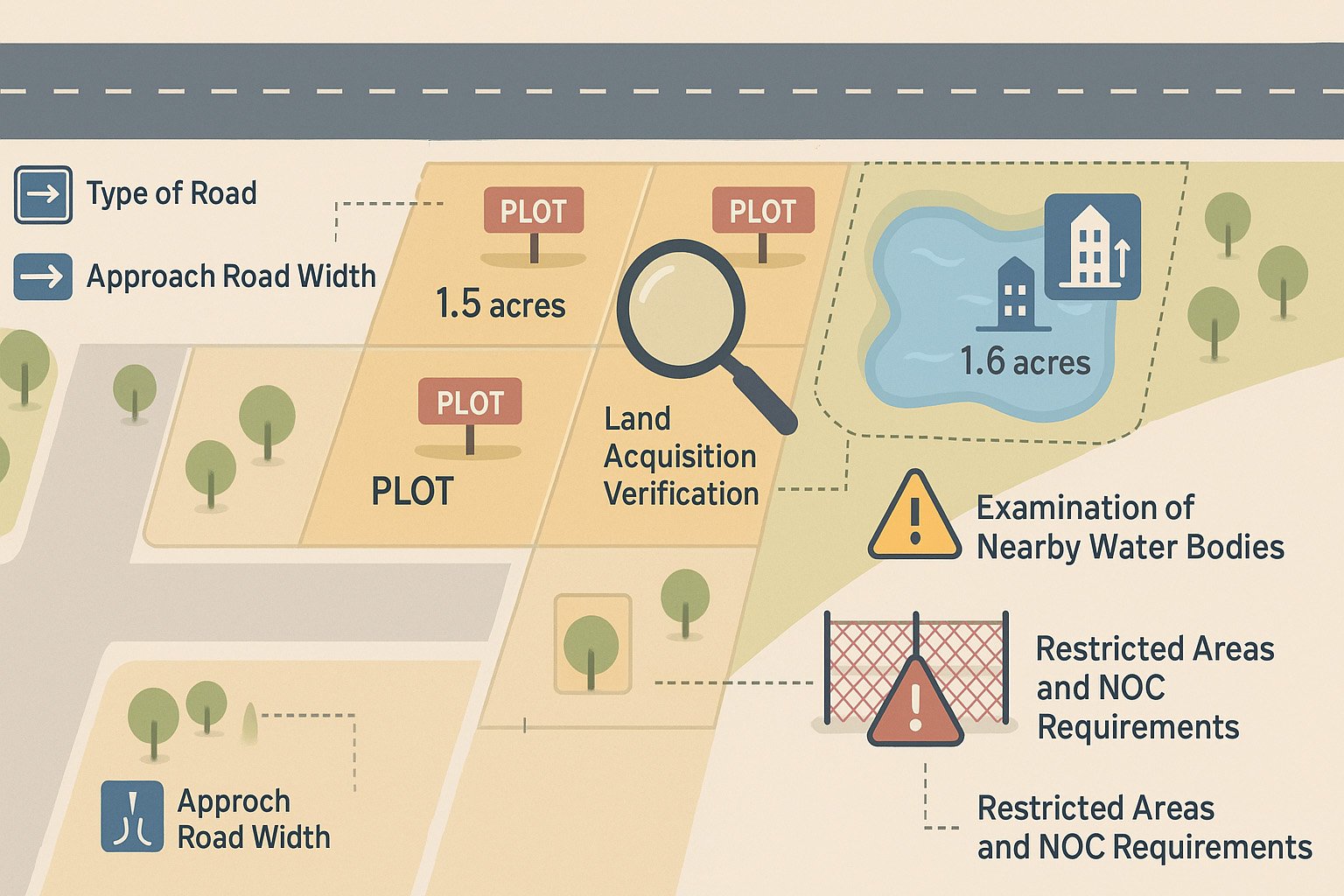
- Access road details and location
Why it matters: It defines exactly what you’re buying.
Risk: Boundary disputes or area shortfalls.
Important Check: Compare with the Field Measurement Book (FMB) sketch and conduct a physical survey.
14. Water Body / Restriction Declaration
Modern deeds often include a clause confirming the property is not part of any water body, pathway, or prohibited zone.
Why it matters: Government can demolish structures on such lands regardless of purchase.
What to Do If Something Is Missing or Incorrect?
- Don’t ignore it or accept verbal promises.
- Ask the seller to amend the draft before registration.
- Get a legal opinion from a property lawyer familiar with Tamil Nadu laws.
- Proceed only after corrections and re-verification.
Conclusion
The Sale Deed is your strongest legal shield when buying property. A few careful checks today can prevent years of stress, financial loss, or litigation tomorrow.
Never rush — verify every clause, cross-check with official records (EC, Patta, approvals), and consult experts when in doubt. Buy smart. Verify thoroughly.