Introduction
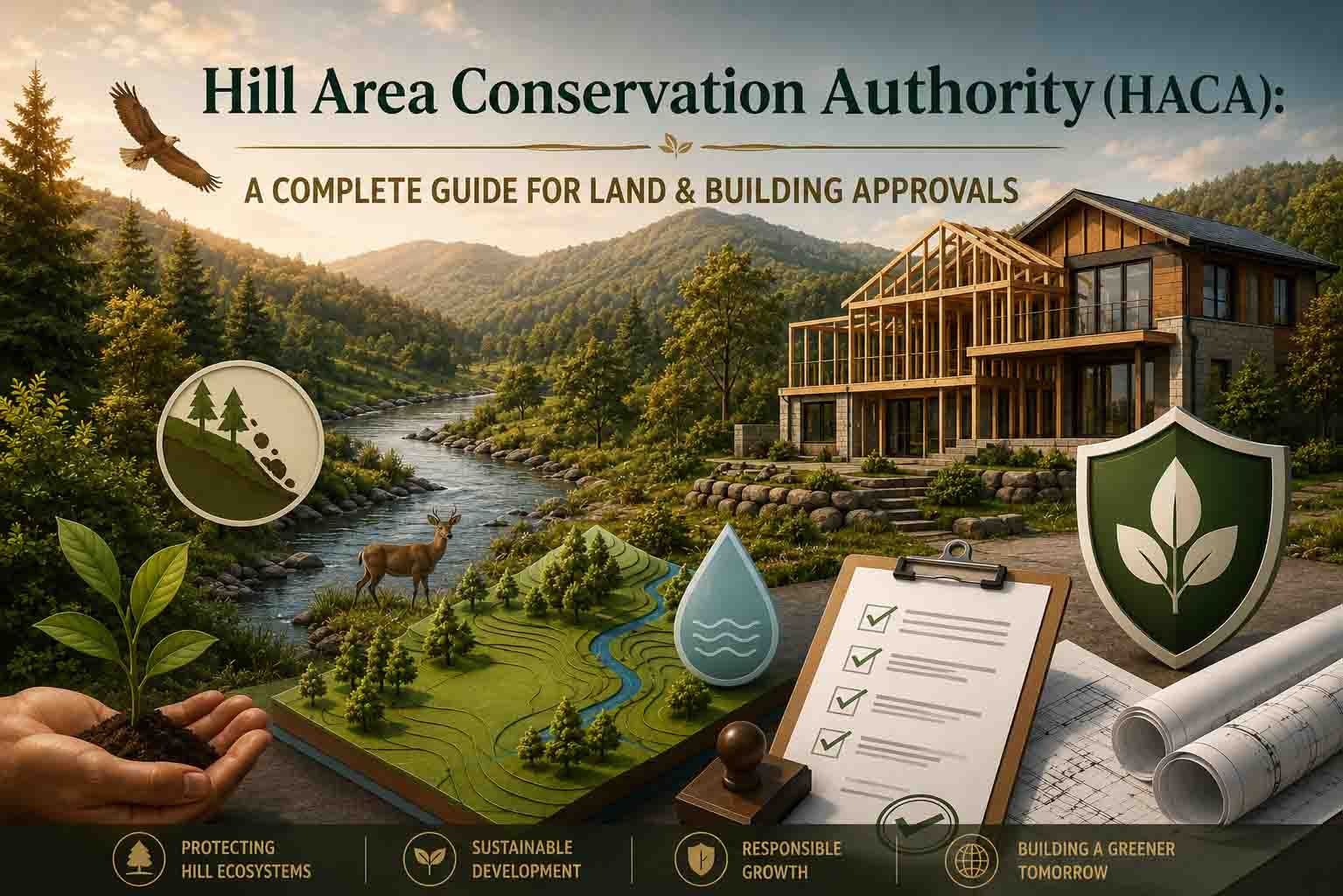
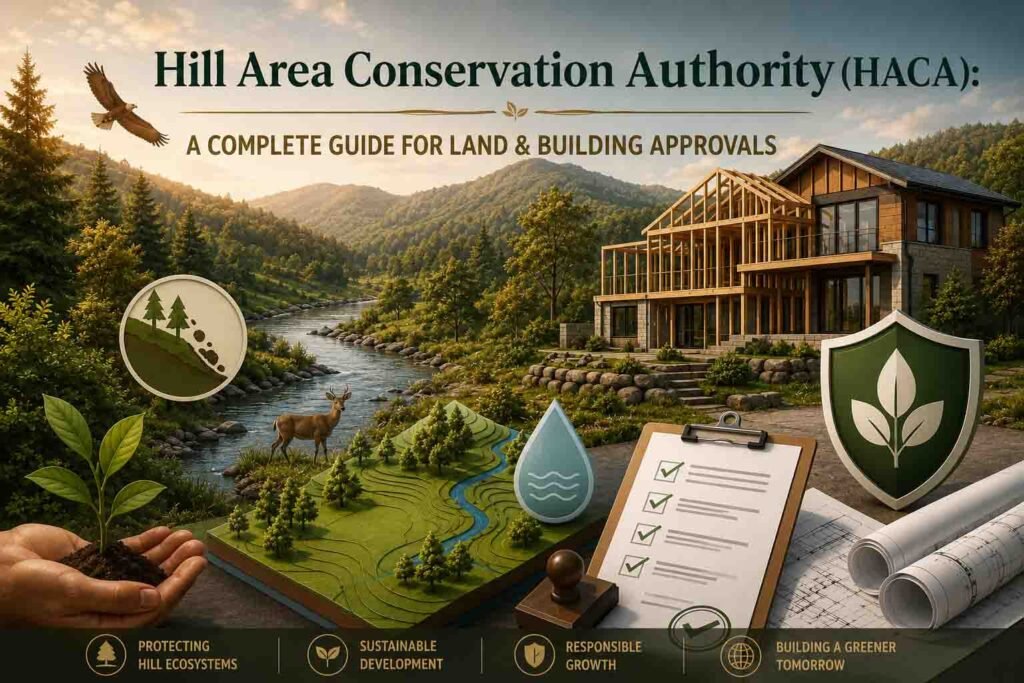
Constructing buildings in hill regions requires more than just standard planning approvals. In fact, these ecologically sensitive zones demand strict regulation to prevent environmental degradation, landslides, and unsafe development. These ecologically sensitive zones demand strict regulation to prevent environmental degradation, landslides, and unsafe development. This is where the Hill Area Conservation Authority (HACA) plays a crucial role.
If you’re planning construction in notified hill areas, understanding HACA approval is essential to avoid delays, penalties, or rejection of your project.
What is HACA (Hill Area Conservation Authority)?
Additionally, its primary objective is to ensure sustainable development while protecting hill ecosystems. to oversee and control development activities in designated hill regions.
Its primary objectives include:
- Protecting fragile hill ecosystems
- Preventing soil erosion and landslides
- Regulating construction activities
- Ensuring sustainable development
HACA approval is mandatory for any building or land development in notified hill areas before obtaining local body approvals.
Where is HACA Applicable?
HACA regulations apply to notified hill areas, especially in districts like:
- Nilgiris
- Kodaikanal (Dindigul District)
- Yercaud (Salem District)
- Other declared Hill zones by the Government
Therefore, any construction in these notified hill regions must comply with HACA regulations before obtaining approvals. Any construction in these regions must comply with HACA norms.
HACA Rules & Regulations
HACA enforces strict guidelines to maintain environmental balance. Some of the key rules include:
1. Land Use Restrictions
- Only permitted land use activities are allowed
- Agricultural land conversion is generally permitted, subject to applicable laws and approvals.
- Forest land conversion is highly restricted and requires stringent regulatory clearances.
2. Building Height & Structure
- Limits on number of floors
- Restrictions based on slope and terrain stability
3. Setback Requirements
- Mandatory open space around buildings
- Distance from roads, valleys, and slopes must be maintained
4. Slope Protection
- Construction on steep slopes is restricted
- Retaining walls and stabilization measures are required
5. Tree Protection
- Cutting trees without permission is prohibited
- Compensatory plantation may be required
6. Drainage & Water Flow
- Natural water flow must not be disturbed
- Proper drainage planning is compulsory
7. Environmental Clearance
- Projects must not harm ecology or biodiversity
- Additional approvals may be required for large developments
HACA Approval Checklist
Before applying for HACA approval, ensure you have the following:
Land Documents
- Patta / Ownership proof
- FMB / Survey sketch
- Encumbrance Certificate
Technical Documents
- Site plan with contours
- Building plan (with elevation)
- Topographical survey report
Survey Requirements
- Accurate land measurements
- Slope analysis
- DGPS coordinates
Supporting Documents
- Structural stability certificate
- Soil test report
- Environmental considerations report
Other Requirements
- Access road details
- Drainage plan
- Tree details (if applicable)
Where is HACA Used / Required?
HACA approval is required in the following situations:
- Resort / hotel developments
- Layout formation and land subdivision
- Any structure near slopes, Forests or eco-sensitive areas
- Any Building approvals above local body or AAA Committee limits can be processed under HACA
- Local bodies in hill areas can approve Residential buildings below 250 sq.m (Ground + 1 Floor)
Common Challenges in HACA Approval
- Incorrect site survey data
- Improper contour mapping
- Violation of slope regulations
- Missing environmental details
- Non-compliance with setback rules
These issues often lead to application rejection or long delays.
Conclusion
The Hill Area Conservation Authority (HACA) is not just a regulatory body—it is a safeguard for sustainable development in fragile hill ecosystems.
If you’re planning construction in hill regions, early compliance with HACA guidelines can:
- Save time and costs
- Prevent legal complications
- Ensure structural safety
- Protect the environment